Open for business: Syria hosts its first travel show in Damascus as visitors begin to return
Summary: The inaugural Syria Travel Show opened at the Dama Rose Hotel in Damascus, bringing together government ministers, airline representatives, hotel chains, foreign investors, and travel influencers. With overall visitor numbers more than doubling in the first half of 2026, the industry races to build the capacity to host them.
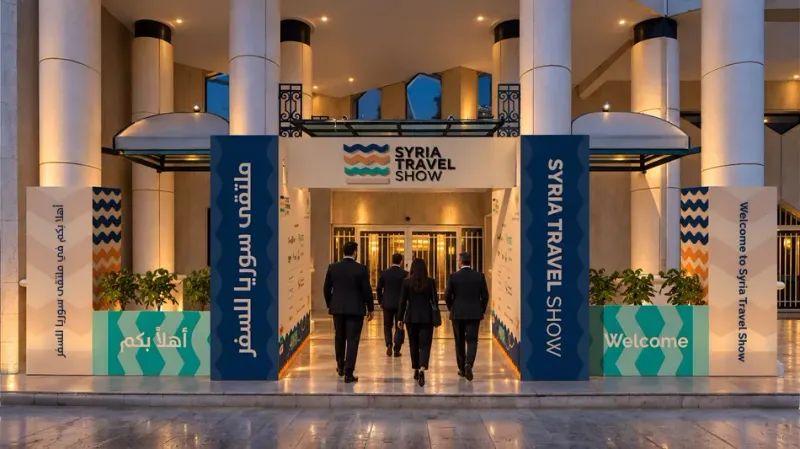
After years of being considered a destination to avoid for international travelers, Syria is not only reopening to tourism but is fast becoming the new "it" destination, at least an adventurous subset of travelers. However, it won't be long before Syria moves to the forefront of must-visit destinations for all travelers. This week, the country is finally showcasing what it has to offer as a tourist destination with the first of what it hopes will become a growing annual trade show for the travel and tourism industry.
The inaugural Syria Travel Show opened on September 28 at the Dama Rose Hotel in Damascus and runs for three days. Organizers have confirmed 34 exhibitors along with 10 sponsors and 43 speakers from 11 different countries, including Saudi Arabia, the UAE, Qatar, Jordan, Germany, the UK, the USA, and South Africa. More than 5,000 attendees attended throughout the three days of events, exhibitions, cultural showcases, panels, and talks. In addition to the host venue, the Dama Rose Hotel, the country's national flag carrier Syrian Airlines and Saudi low-cost carrier Flynas are among the event sponsors, as well as the regional ride-sharing company YallaGo.
The numbers driving the show
The timing is no accident. Syria received 3.52 million visitors in the first half of 2026, a 111% increase on the 1.67 million who came in the same period the previous year. And perhaps more importantly, the mix is changing too. Arrivals of non-Arab foreign visitors rose 448% to about 719,000, visitors from Arab countries rose 107% to about 664,000, and visits by Syrians living abroad increased by 75% to 2.13 million. And with the year's third quarter wrapping up along with the show, preliminary figures suggest arrivals in this quarter are already approaching 3 million.
Tourism Minister Mazen Al Salhani has noted that the growth is no longer tied to one geography or one type of visitor. While Turkey remains a core market, demand is building in Europe (especially Germany, Sweden, the Netherlands, and the UK) and in North America, as well as among Jordanian, Lebanese and Gulf travelers. Saudi Arabia, the UAE and the wider GCC are the ministry's priority growth markets.
Minister Al Salhani has also said the ministry will transition to judging success by visitor spending, length of stay, occupancy, and impact on employment and investment rather than by arrivals alone. In the lead-up to this inaugural show, he described the goal moving forward as building a tourism-led economy driven by the private sector and responsible investment.
Voices of change
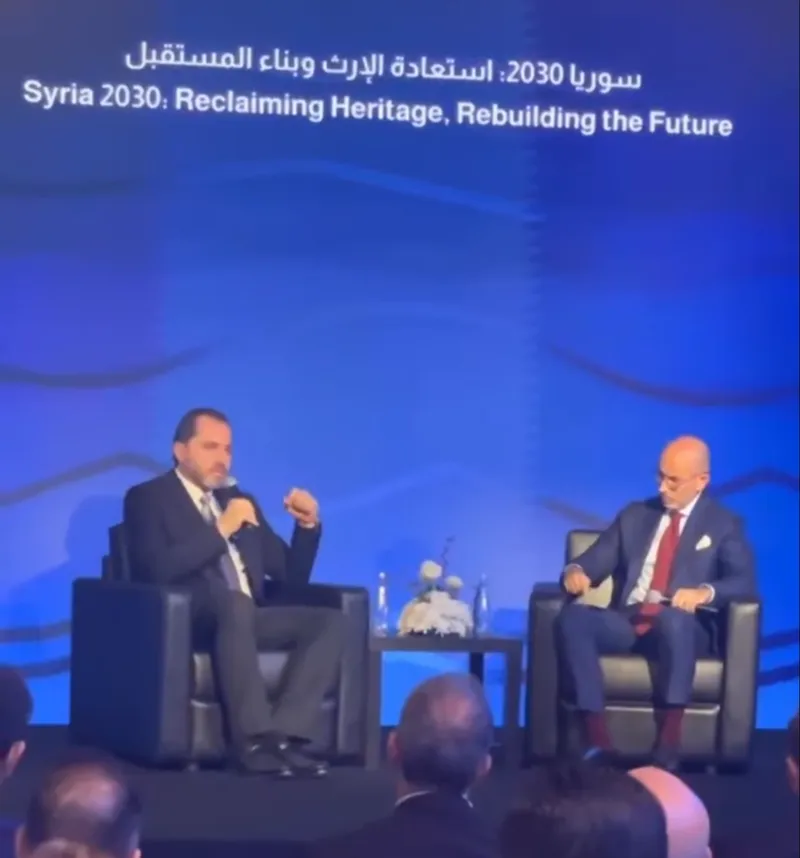
The first afternoon of the show was devoted to policy and investment. Al Salhani opened the conference with a fireside chat entitled "Syria 2030: Reclaiming Heritage, Rebuilding the Future," moderated by Raed Hergli, Visa's vice president of government affairs. Visa's presence is itself a marker of change, as the company processed its first live international card transaction in Syria only in August - a coffee purchase by Syrian President Ahmed al Sharaa.
A panel on policy as the foundation of tourism revival followed, featuring Dr. Shaun Vorster alongside Mourhaf Nazha, president of the Federation of Syrian Chambers of Tourism, and Ziad Al-Balkhi of the Ministry of Tourism. Dr. Vorster, who is chief strategist on the executive board of the World Tourism Association for Culture and Heritage, also spent 11 years as special adviser to South Africa's tourism and environment ministers as well as five years as a commercial vice president and special adviser for Dubai's Expo 2020.
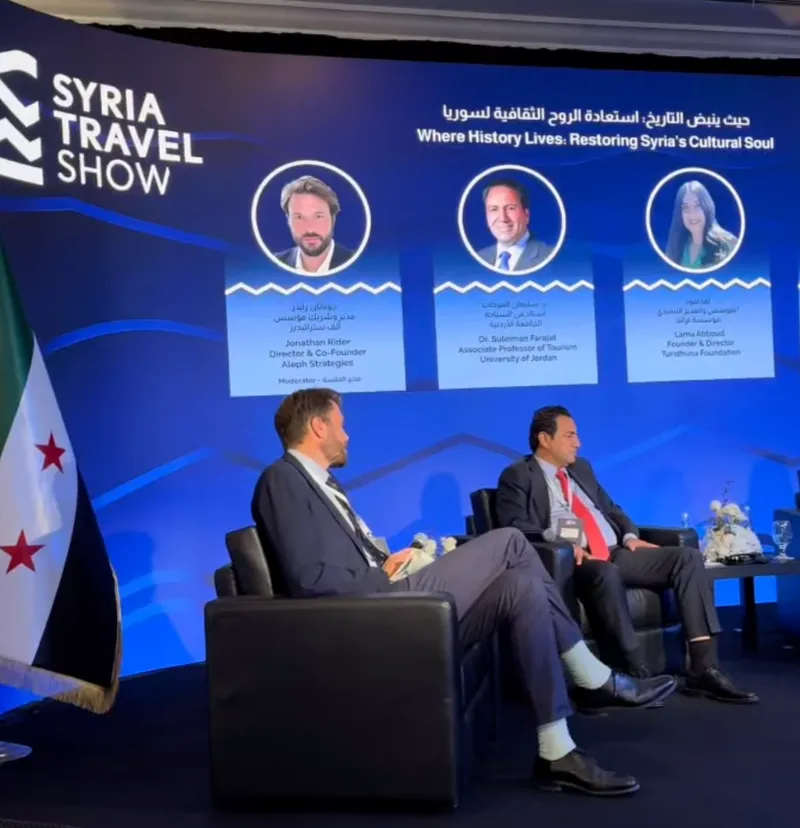
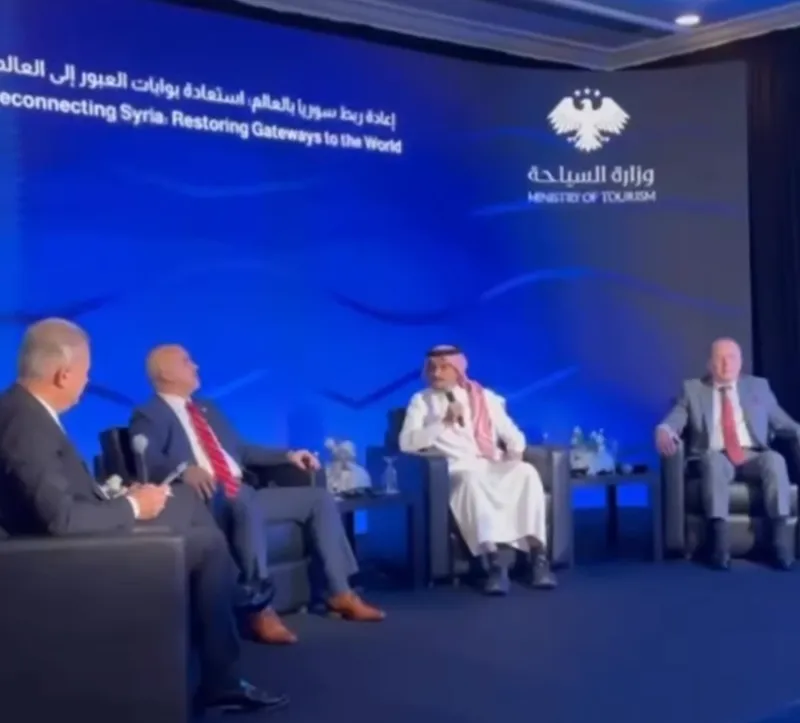
Later first-day sessions covered mobilizing investment, with economist Dr. Karam Shaar and Visa's Mohamed Bardastani, and hospitality and real estate, with William Harley-Fleming and Remco Werkhoven, area general manager for the Levant at Legacy Hotels Holding.
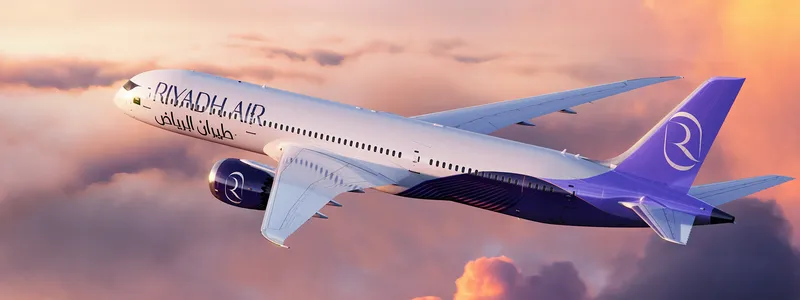
The second day of the show centered on connectivity. Captain Anwar Akkad, the Etihad Airways veteran who now leads Syrian Airlines, joined Flynas' Abdulelah Al Eidi and Osama Satea of Syrian private carrier Fly Cham to discuss restoring the country's civil aviation sector. Syrian Airlines, which is in the middle of an active rebuild, only had three working aircraft earlier this year but plans to double its fleet by the end of 2026 with the help of Qatari-Syrian investor UCC Holding. This month, the carrier added Copenhagen and Vienna to a European network that only just restarted in July with Amsterdam and Moscow.
The final day of the inaugural event focused on technology, community tourism, and skills. Qais Amori of Saudi online travel agency Almosafer, Mamoun Hmidan of Wego, Khaled Mustafa of YallaGo Syria, and Rami Kaiem of the app My Syria discussed how data drives destinations.
Among the many Syrians and other Arabs who engaged with audiences during the three-day event, one name on the speaker line-up stood out - Nick Maddock, an American travel content creator with no previous ties to Syria but no shortage of international travel experience under his belt.
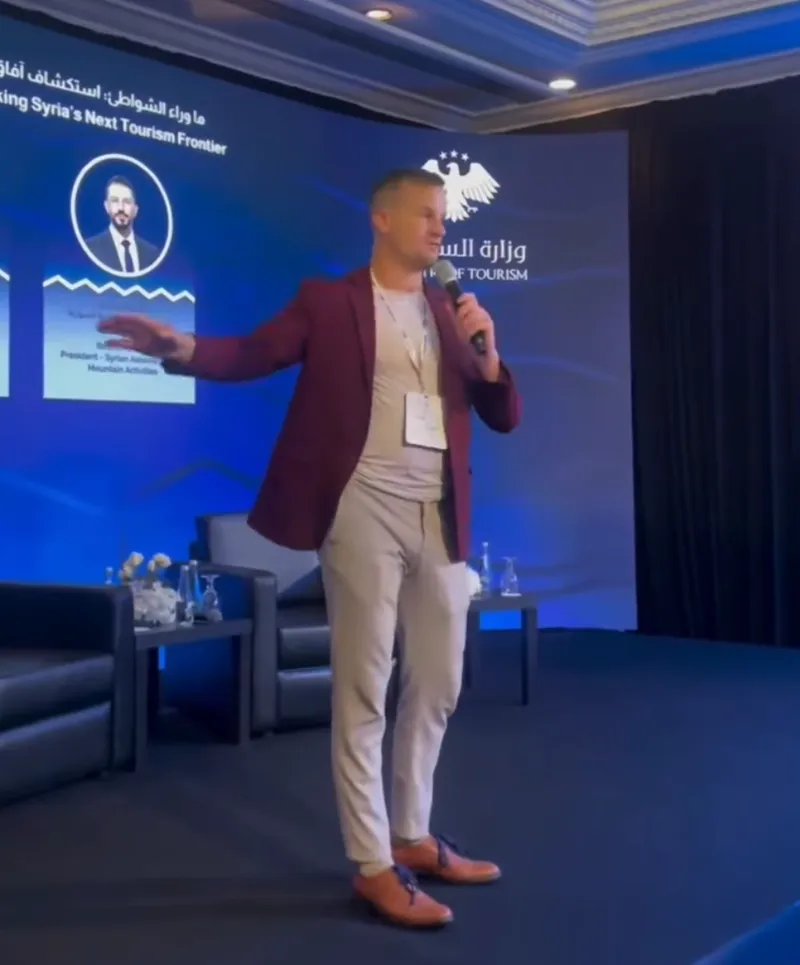

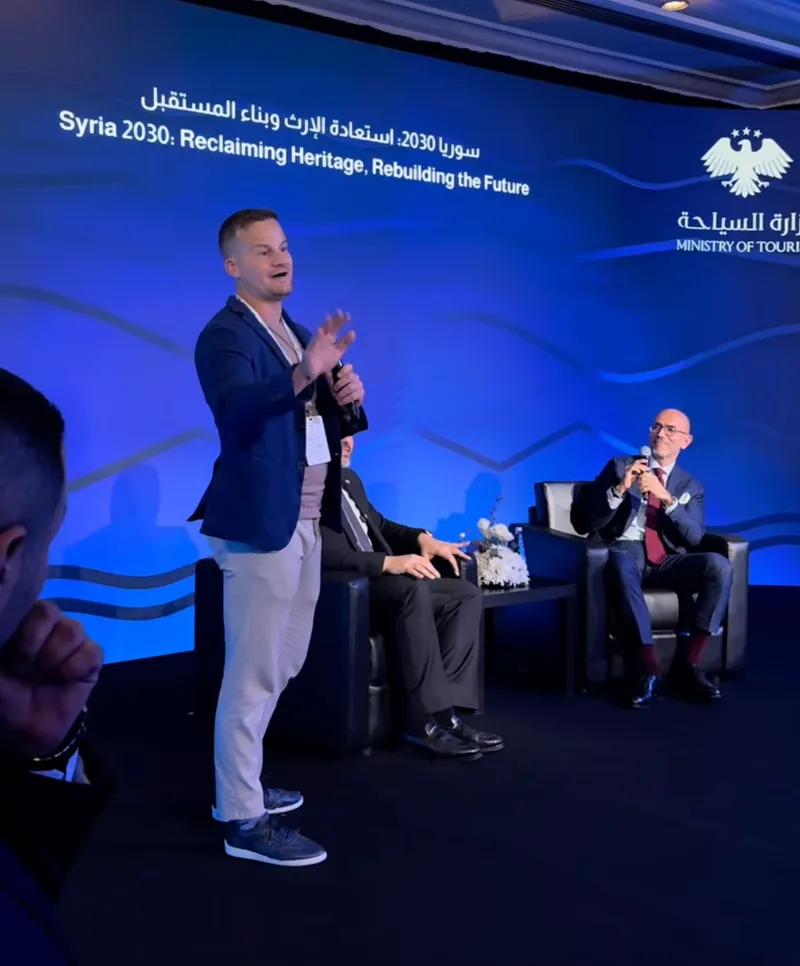
Already having visited every governorate in Syria within a year of the country opening itself back up to tourism, Maddock quickly won the hearts of hundreds of thousands of Syrians on social media, both within the country and throughout the global Syrian diaspora, through his authentic videos enthusiastically showing sites, cities, and sides of the country that many - including many Syrians - have never seen or knew existed before.
Maddock joined Syrian creators Suhair Al Samman and Ahmad Abdulrahman for "Brand Syria: From Headlines to Heritage," moderated by Ninwa Hanna of Fursa Group. He later moderated a fireside chat on mountain and adventure tourism with Ibrahim Saoud of the Syrian Association for Mountain Activities.
Demand before capacity
Despite all the optimism - and there is certainly good reason for optimism - Syria's tourism and hospitality industry still faces a significant capacity challenge. Syria currently has fewer than 20,000 hotel rooms, and close to 60% of those are in one- and two-star properties. Al Salhani has estimated that around $100 billion of investment is needed to fully rebuild the sector. Meanwhile, a government program already aims to begin upgrading over 300 one- and two-star hotels, which should improve the quality of at least 10,000 existing rooms.
Some foreign capital is already beginning to flow into the country. About $1.5 billion in tourism investment commitments was announced last year, according to Enterprise. Saudi Arabia's Ezdihar Group has begun work on the Beaumont Damascus, a project estimated at $250-300 million. And on the coast, the Shahin Resort in Tartus currently has 261 rooms in use with about 200 more due to come online next year.
While early outsized demand is a good problem to have, the digital infrastructure for growth is only now beginning to fall into place. Many tech products, software development tools, and online payment services have largely been unavailable for use in Syria because of the multiple levels of US-imposed sanctions, but the recent removal of those sanctions has already begun to jumpstart web-based commerce. Until late August of this year, Syrian hotels could not reliably collect deposits from overseas clients trying to book stays. But that has now started to change after Visa processed its first live international transaction in the country and Mastercard and QNB completed their first transaction in Syria in more than 15 years. The My Syria app, launched in July, can already accept Apple Pay and Google Pay, and the ministry has signed new digital transformation agreements with Saudi firms Tamkeen, Cipher, and Hawaz.
Air access is improving quickly too. Emirates, Flydubai, Etihad, Air Arabia, Flynas, Royal Jordanian, Turkish, Pegasus, SunExpress, AJet, Jazeera Airways, and Kuwait Airways are among the carriers that are already serving Damascus. Some of those carriers are also offering service to Syria's second-largest city of Aleppo, where work to expand Aleppo International Airport's capacity to more than 2 million passengers a year is due to begin in early 2027.
In the far east of the country, Deir ez-Zor International Airport reopened in August. And just this month, work began to restore and upgrade Latakia International Airport following an agreement with Russia to hand over control of civil aviation infrastructure in the area to Syria's General Authority of Civil Aviation and Air Transport, according to Omar Hosari, the authority's chief executive.
Heritage as the draw, but not the only draw
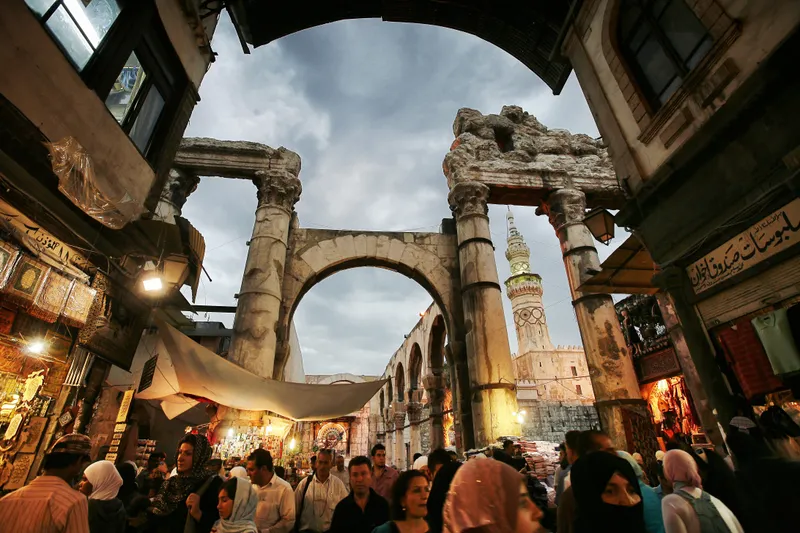
Syria's pitch to the rest of the world rests on a vast portfolio of well-preserved ancient sites and a breadth of history that few destinations can match, including its continuously inhabited ancient cities of Damascus and Aleppo; the ruins of ancient kingdoms such as Palmyra; and the eerily empty and largely tourist-free (at least for now) Greek, Roman, and Byzantine sites like Apamea.
But Syria's diversity isn't confined to its history. Its religious diversity remains a core part of the country's identity today, and regions of the country such as the Christian Valley in the west offer breathtaking mountain scenery, ancient monasteries, medieval crusader castles, gourmet wineries, and an assortment of adventure sports and activities with views across to Lebanon and the Mediterranean Sea.
The day before the travel show opened in Damascus, Syria marked World Tourism Day at the Aleppo Citadel with the launch of Touristech, a national initiative that uses interactive technology to present information about its heritage sites. The first phase covers six locations inside the citadel, and the launch drew more than 1,500 guests, including Tourism Minister Al Salhani. Organizers plan to extend the initiative soon to other sites across the country as infrastructure and access expand.
Even with somewhat limited starting capacity, the direction of Syria's nascent tourism sector is already becoming clear. Following the success of this first domestic travel trade show, the country's representatives will soon go abroad to exhibit at Arabian Travel Market and ITB Berlin. But for a country to which travel has been closed, shunned, and even feared for so long, Syria is already in a better starting position than many destinations that have never faced any challenges or setbacks on the level of those Syria has endured, and it will only get better from here.