How the lesser-known Red Sea Project reveals the bigger picture of early Saudi success with Vision 2030
Summary: Critics who have been quick to jump on delays and restructuring within the NEOM giga-project as evidence of a faltering Vision 2030 are obscuring - and perhaps intentionally ignoring - the enormous progress and impressive success that the kingdom has already achieved within several other giga-projects that are getting far less attention from international media, such as the new mind-blowing resorts that have opened down the coast as part of the Red Sea Project.
Over the past year, the admittedly ultra-ambitious NEOM giga-project has become a favorite target in the media for anyone looking to argue that Saudi Arabia's Vision 2030 is faltering. Sure, the kingdom has scaled back The Line, canceled several construction contracts, and diverted budgets away from projects that can wait amid three unexpected wars in as many years involving its regional neighbors, the most recent of which saw retaliatory attacks on critical Saudi infrastructure, a closing of the Strait of Hormuz, and a strain on the country’s oil revenues and overall finances.
Commentators have seized on each of those strategic adjustments as proof that the entire Vision 2030 program is in trouble. But NEOM is only one of the kingdom's many planned mega-projects and giga-projects, and treating it as the whole story ignores a much bigger - and more successful - picture. Several hundred kilometers to the south of NEOM lies another region that’s home to another of Vision 2030’s giga-projects which is already succeeding spectacularly - the Red Sea Project.
But reporting on plans going well, as expected, or in the right direction doesn't get anywhere near the same numbers of monetized views and clicks as do headlines about doom, gloom, and failure. For the new and traditional media alike, schadenfreude-laden stories feel better and pay better than nuanced, big-picture, or contextually framed stories do.
That’s just a reality of all types of media today, but it doesn’t reflect the reality that’s already on the ground in places like Shebara, Desert Rock, Nujuma, Shura Island, and nearby Al Ula. These projects, all elements of or adjacent to the lesser-known (and much less covered) Red Sea Project that also once seemed futuristic and fanciful, are now open and operating realities that are so stunning and impressive that photos and videos from there are often confused with or even dismissed as AI.
When Saudi Arabia launched its national tourism strategy for Vision 2030 in 2019, the plan set a target of 100 million combined domestic and international annual visitors to sites and cities around the kingdom by 2030. However, by 2023, it had already comfortably surpassed that target, hosting over 109 million a full six years ahead of schedule. The following year that figure climbed to 116 million, and in 2025 it topped 122 million, 30 million of which were international. Now, instead of scaling back, the country has scaled up its visitor number goals to 150 million by 2030. And even despite the ongoing regional conflicts, it appears well on its way to hitting that goal too, likely also early.
In a largely desolate expanse spread across islands and inland desert between the Red Sea coastal towns of Umluj and Al Wajh, at least 10 jaw-dropping luxury and futuristic resorts have already opened, with several more expected by the end of the year. Among those properties already welcoming guests are some of the most luxurious and elite hospitality brands in the world, including Six Senses Southern Dunes, Nujuma - a Ritz-Carlton Reserve, the Red Sea EDITION, the SLS Red Sea, and the Four Seasons Resort and Residences Red Sea.
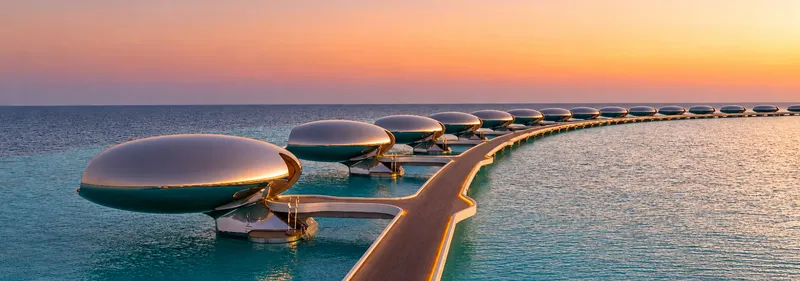
Then there are several newer brands that most international travelers would not have heard of before, but which they absolutely should know and will want to see before too long. Those include the likes of the Shebara Resort, with its shimmering spaceship capsule-looking overwater bungalows, and Desert Rock Resort, a mirage-like futuristic oasis built into the side of a mountain.
Access to this previously empty stretch of Red Sea coastline has also grown along with the number of new resorts coming online. Red Sea International Airport (RSI) opened in September 2023 and is already handling 15-20 flights per week depending on season, including daily service from Riyadh; thrice-weekly service from Jeddah; and regular direct flights on Qatar Airways, FlyDubai, and soon Etihad Airways from their hubs in Doha, Dubai, and Abu Dhabi.
The new luxury airline BeOnd has also offered all-business-class flights from Milan direct to Red Sea International Airport and plans to launch direct service from London potentially as early as December. And although only 3.5 hours by car from RSI, the smaller Al Ula International Airport has also added direct flights from Riyadh, Jeddah, Doha, and Dubai.
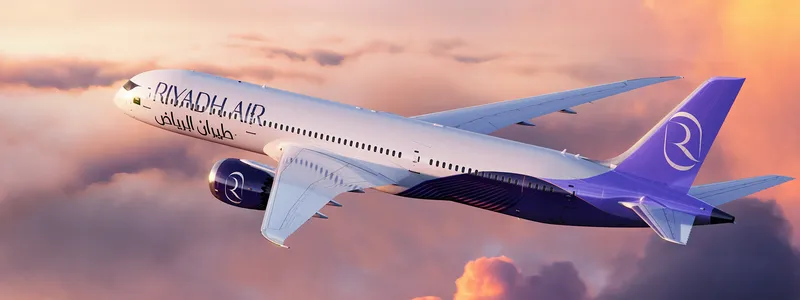
The Red Sea Project is far from the only Vision 2030 project already delivering. Riyadh Air, the new PIF-owned national carrier created under the kingdom's aviation strategy, flew its first commercial service to London Heathrow on June 10 and rapidly scaled up to 14 destinations across Europe, the Middle East, and Asia just 101 days later, with 22 cities planned by March of 2027.
In the capital, the new Riyadh Metro opened in December 2024 and was fully operational the following month with six lines, 85 stations, and 176 kilometers (109 miles) of track, which Guinness World Records recognized as the world's longest fully automated, driverless metro network. The brand new system had already completed 200 million passenger journeys by March of this year.
Reporting on the clear and ongoing success of the Red Sea Project is not to say that NEOM's adjustments aren't real or disappointing. But for anyone following Saudi Arabia's progress only through the media, especially social media, it's worth remembering that the reprioritization of money, equipment, and workers away from some NEOM projects has enabled other Vision 2030 mega-project goals to forge ahead.
And who knows? It’s very possible that we’ll see a refocus on some of NEOM’s most ambitious and futuristic projects again in the future, especially if the unpredictable new conflicts that arose over the last three years get resolved and the kingdom’s traditional money-printing carbon exports can once again return to global markets at full force.
But whether that happens sooner or later, Saudi Arabia’s pursuit of Vision 2030 will continue at whatever pace circumstances on the ground dictate. And as that happens, international travelers should expect Vision 2030 projects generally and the Red Sea Project specifically to become an increasingly hard success story to ignore.