Turkish Airlines inks deal with Boeing for 150 new jets
Summary: Turkish Airlines has finalized a deal to acquire up to 150 new Boeing 737 MAX jets, supporting the carrier’s long-term expansion across its domestic and international routes. Turkish Airlines leads the global airline industry in the number of countries served and carries nearly 85 million passengers annually.
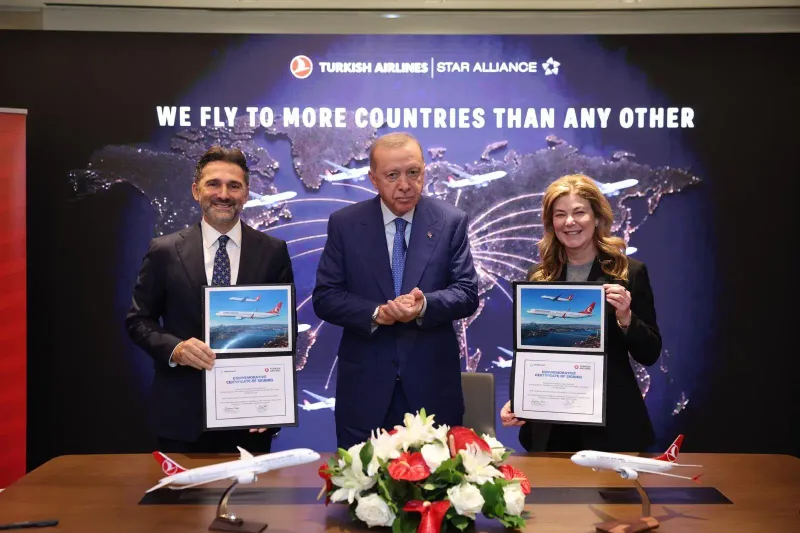
In a signing ceremony presided over by Turkish President Recep Tayyip Erdoğan in New York, Turkish Airlines announced that it has finalized an agreement to buy up to 150 Boeing 737 MAX aircraft, securing additional needed capacity for its short- and medium-haul network. The deal comprises 100 firm orders for the 737-8 and options for another 50 aircraft, with rights to substitute the larger 737-10 if desired. Boeing described the sale as the airline’s largest single-aisle order from the manufacturer.
Deliveries are scheduled between 2033 and 2037, according to the airline’s filing with Türkiye’s Public Disclosure Platform, placing the purchase within its longer-term fleet planning. The filing says the board approved the transaction on September 18, 2026.
Finalization follows months of negotiations over engine support. Gulf News reported that discussions with CFM International had stalled over repair costs, spare-parts pricing and maintenance terms, prompting Turkish Airlines to consider switching the purchase to Airbus’s A320neo line of jets before ultimately reaching an agreement and moving forward with the Boeing deal.
The narrowbody agreement follows a separate 2025 purchase covering up to 75 Boeing 787 Dreamliners, which included 50 firm aircraft and 25 options scheduled for delivery between 2029 and 2034. Together, the purchases support expansion across both regional and long-haul operations.
Turkish Airlines chairman Murat Şeker said the new MAX aircraft would improve operating efficiency and provide greater flexibility across the carrier’s Istanbul-based network. Substitution rights for the 737-10 would allow the airline to select a higher-capacity model as passenger demand develops.
Turkish Airlines and its AJet subsidiary already operate more than 200 Boeing aircraft, including earlier-generation 737s, MAX jets, 777s, 787s and freighters. The new 737-8s are intended for both domestic and international services. But with the first deliveries seven years away, the agreement establishes a future aircraft pipeline rather than an immediate increase in flights or destinations.