Riyadh Air’s launch and rapid expansion are proof of KSA’s ability to deliver
Summary: The recent launch and rapid expansion of Riyadh Air's route network across Europe, Asia, and the Middle East shows that this new player on the global aviation scene is more than just glamorous branding. With the backing of Saudi Arabia's Public Investment Fund and with leadership from a former Etihad chief executive, Riyadh Air is poised to break into a very competitive market and compete on par with the global and regional heavyweights.
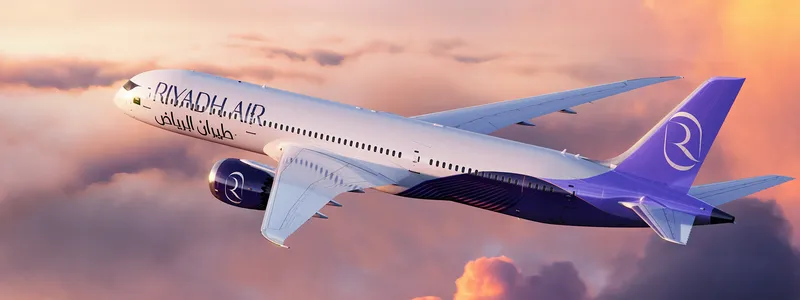
When Saudi Arabia unveiled Riyadh Air in March 2023, the new national carrier arrived with a distinctive lavender livery and plenty of ambition. But over the next three years, it remained largely a brand without a network. That finally changed this summer.
In the 101 days following its first commercial flight to London Heathrow on June 10, Riyadh Air had already launched service to 14 destinations across Europe, the Middle East, and Asia. This broad international expansion so soon after launch has drawn far less attention than the airline’s initial launch or its elegant branding. But such a rapid build-out of its route network is a sure sign that Riyadh Air is here to stay and, when it comes to competing against the other giants in the region, here to play - and win.
Riyadh Air is a central piece of the Saudi Aviation Strategy, one of the programs under Vision 2030, which aims to triple the kingdom's annual passenger traffic to 330 million by 2030, connect it to more than 250 destinations, and attract $100 billion of investment into the sector. King Salman International Airport, announced in November 2022 with six runways across 57 square kilometers (22 square miles) and a planned capacity of 120 million passengers by 2030, is the infrastructure.
Riyadh Air, wholly owned by the Public Investment Fund (PIF) and led by Tony Douglas, the former chief executive of Etihad, is the airline built to fill it, with a projected $20 billion contribution to non-oil GDP and more than 200,000 jobs attached to it at launch.
But getting to launch took time. The order book grew to 39 Boeing 787-9s - the Dreamliner - with options on 33 more, 60 Airbus A321neos, and 25 A350-1000s, while the launch date moved more than once.
The General Authority of Civil Aviation issued Riyadh Air's air operator certificate on April 6, 2025, and the airline's first flight, an invitation-only service from Riyadh to Heathrow on October 26, 2025, used a 787-9 leased from Oman Air because none of its own aircraft had been delivered yet.
The first two 787-9s landed in Riyadh on June 5 and a third in Jeddah on June 6, and Riyadh Air moved its commercial launch forward three weeks, from July 1 to June 10. Heathrow came first, with daily service. Jeddah followed on June 14, Dubai on June 18, and Cairo on June 25, before Málaga on July 14, Madrid on July 17, and Kuala Lumpur on July 30. In August, the airline added Mumbai, Dhaka, Islamabad, and Lahore, and in September came Bangkok, Manila, and finally Manchester, its second British city, on September 19. And the airline has kept adding capacity to match.
Riyadh Air was up to a fleet of eight aircraft by the end of July, it scheduled about 266,000 two-way seats for September, and at the Farnborough Airshow it exercised options on 28 more Dreamliners, 20 of which were the larger 787-10 variant, taking its Dreamliner commitment to 67 in total alongside 31 A350-1000s. As for destinations, the company's aim is 22 cities by March 2027 and over 100 cities by the end of the decade.
Notably, Riyadh Air has not focused only on flashy long-haul markets or its home market of Saudi Arabia. Dubai and Cairo were both in service by the end of June, well before Madrid, connecting Riyadh with two of the region's biggest markets. And additional launches in August also added South Asia to its route map.
Douglas said the launch cities were “carefully selected to serve key markets” for business, tourism, and trade, and to support transit between Europe and the Middle East, Asia, and Africa. The airline has also signed a memorandum with Delta and a network cooperation agreement with ANA, foreshadowing plans to expand further afield into North America and East Asia.
A rapid build-out like that is only possible with the backing of a supportive state with ambitious, visionary leadership. Indeed, it is that very state backing that is also building the new home airport, ordering the fleet, and supplying the capital to carry a new airline - and one in an already very competitive market at that - through its first few seasons all at the same time.
The contrast with what private capital has managed in the same segment, however, is stark. La Compagnie, the French all-business-class carrier, is the closest thing to a success story among independent premium start-ups. It launched operations in July 2014, recorded its first profit (about $1.1 million or €1 million) in 2022, and now operates two Airbus A321neos with 76 lie-flat seats each between Newark and Paris, Milan, and Nice.
A third aircraft is due later this year, but twelve years in, that’s just three lines on its route map. In its defense, however, La Compagnie entered the market with a very different strategy and set of assumptions - namely that it could rely on more affluent premium travelers to fill its business-class-only seats on transatlantic routes.
Nearly a decade later, another all-business upstart airline calling itself BeOnd (not a typo), a Dubai-headquartered and Maldives-registered airline backed by the Emirati investment firm Arabesque and the Maldivian SIMDI Group, launched in 2023 with plans for 32 aircraft within five years. However, it currently operates only two, an A319 and an A321.
On April 18, BeOnd suspended its entire schedule until October without explanation. According to trade reports, the pause came as jet fuel prices roughly doubled during the Iran war, although the war itself, which severely impacted the airspace through which BeOnd’s routes operate, likely had something to do with the suspension too. Its planned London and Paris routes are now scheduled for December.
And then there is Global Airlines, the British start-up that bought a single Airbus A380 in 2023. It flew several one-off Glasgow to New York and Manchester to New York flights in May 2025 under the operating certificate of a charter airline called Hi Fly Malta, but the aircraft has been parked since July 2025 awaiting a 12-year heavy maintenance check and a creditor filed a winding-up petition against the company in May leaving its future in limbo.
None of this is to say that private airlines always fail while state-backed carriers succeed, as the failures of Alitalia, Malév, and Olympic Airlines all confirm. But the assets that a new airline can spend years trying to assemble - the aircraft, takeoff and landing slots, an operating certificate, a maintenance program, and the cash to survive at least the first few years without profitability - were already in place at Riyadh Air before it even sold its first ticket.
Riyadh Air still has plenty of hard work, smart strategizing, and public convincing ahead. Reaching 22 cities by March 2027 depends on continued 787 deliveries and on the A321neos that have yet to arrive for regional routes, not to mention the geopolitical factors that are completely out of its or any of its suppliers’ control. And building its hub in Riyadh means competing for transfer traffic with Emirates, Qatar Airways, and Etihad, each of which has spent decades building its own brand and base of loyal frequent fliers.
But what Riyadh Air’s launch and rapid expansion this summer have already shown is that the kingdom can put a new national carrier into scheduled international service on an ambitious timetable it set just this spring, and then beat it by three weeks. If new aircraft keep arriving at the current pace, we should expect Riyadh Air's network to keep growing at a speed that few, if any, new airlines have managed - or ever could.